
What Is an AI-Readiness Score? How to Make Your Site Readable for AI
AI-Readiness measures whether AI systems can reach and read your site. The technical base under GEO: crawlers, structured data and renderability.

ChatGPT SEO means optimizing your content so ChatGPT cites your brand. Here is how to let the right crawler read your site and get mentioned.

GEO makes your content citable for AI models like ChatGPT. This is what works, what does not, and how to start in five steps.
Plenty of GEO advice sounds logical but is wrong. Eight stubborn myths about schema, llms.txt and AI citations, debunked with peer-reviewed research.

A 20-point GEO audit covering accessibility, structured data, content and authority, so AI can reach, read and cite your website.

GEO marketing makes your brand visible in AI answers like ChatGPT. It does not replace SEO: it is a separate channel you measure and build on its own.
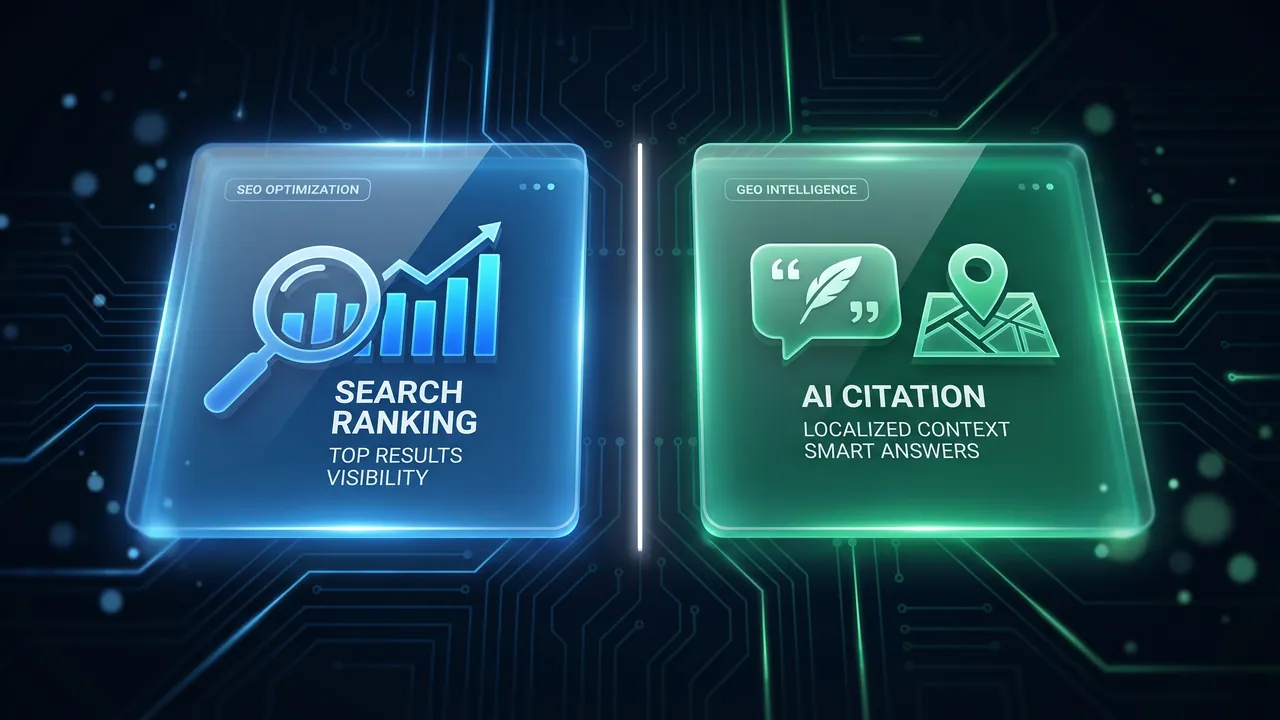
SEO measures your Google ranking. GEO measures whether ChatGPT, Claude and Gemini cite your brand. Two independent channels, each needs its own approach.

Google AI Overviews are the AI summaries at the top of search results. What they are, how Google picks the sources, and how you get cited in them.

AI chatbots and AI search engines each fetch answers differently. Here is how to get found in ChatGPT, Gemini, Claude and Perplexity and measure it.

The GEO Score weighs mention rate (50%), sentiment and model coverage. Eight tips to get cited more often in ChatGPT, Claude, Gemini and Perplexity.

Measure AI visibility in three layers: mention rate, share of voice and AI referral traffic. Repeated measurement over five AI sources makes GEO steerable.

SEO for AI is not a break with your existing work. What still counts, what changes, and what gets added now that AI rewrites the search results.

GEO (Generative Engine Optimization) decides whether AI models like ChatGPT cite your brand. The complete guide: definition, levers and how to start.